The Meaning of Kor: The Turkish Word for a Live Ember
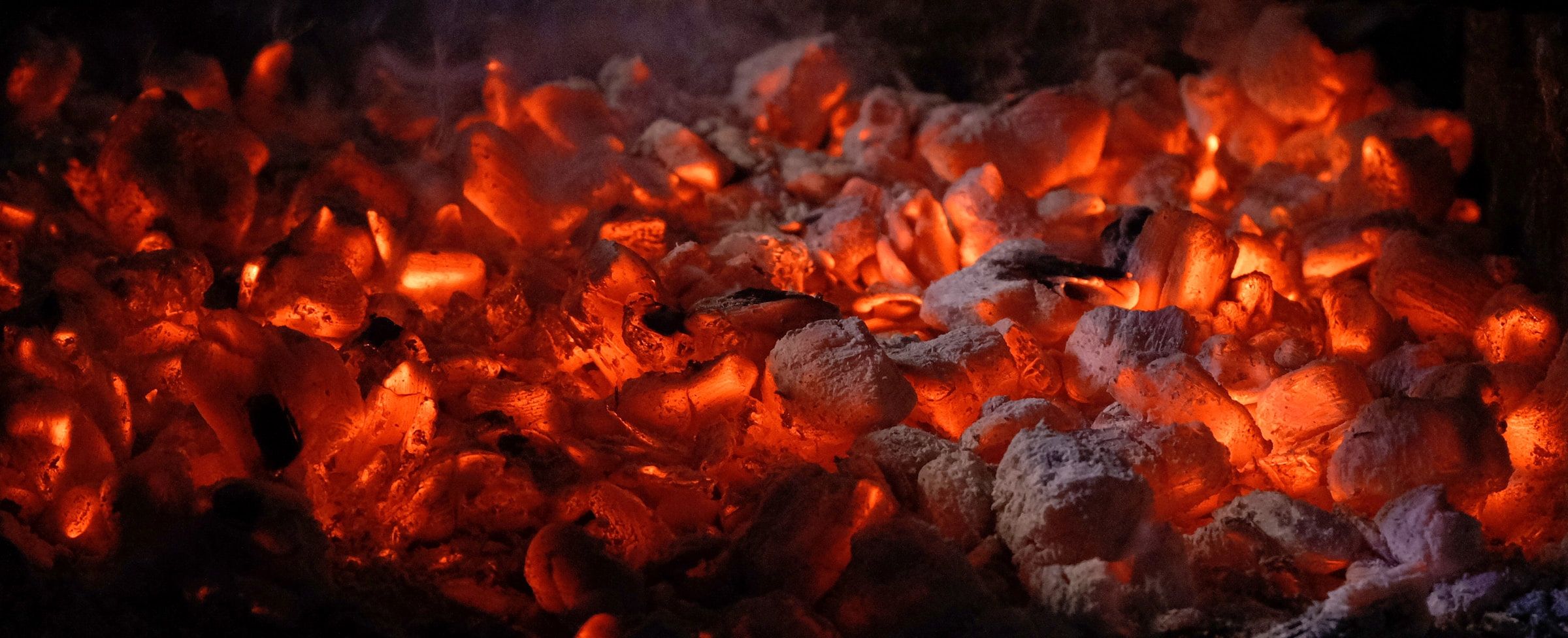
Every restaurant name carries a story. Ours is a single Turkish word that most people in Brentwood have never heard, yet it describes the one thing that makes our food taste the way it does. That word is kor.
What does kor mean in Turkish?
In Turkish, kor means a live ember. It is the glowing, red hot piece of charcoal or wood that remains after the flames have died down. When a fire first catches, you see tall yellow flames. Those flames look dramatic, but they are not what a Turkish cook waits for. The cook waits for the flames to settle and the coals to turn a deep, radiant orange. That radiant coal is the kor.
You can think of kor as fire in its most patient and most useful form. It gives off a steady, even heat without the soot and flare of an open flame. It is quiet. It glows rather than roars. And it is exactly the heat you want under a piece of marinated lamb or a skewer of chicken.
Kor, koz and ates: three words for fire
Turkish is precise about fire, and it helps to know the difference between three words that English often flattens into one.
Ates is the general word for fire. It covers everything from a candle to a bonfire. If something is burning, it is ates.
Koz refers to embers as a whole, the bed of glowing coals that a grill rests on. Turkish cooks talk about cooking food on the koz, meaning over that bed of embers. The dish koz patlican, a smoky mashed aubergine, takes its name from this word, because the vegetable is charred straight on the coals.
Kor is the single ember itself, the individual coal at its hottest and most alive. If koz is the bed, kor is the concentrated heat within it. The two words are close cousins, and in daily speech they overlap, but kor carries a stronger sense of pure, focused warmth.
We chose kor because it captures a moment rather than a pile of fuel. It is the peak, the point where the fire is finally ready and the cooking can begin.
Why the ember matters in Turkish cooking
Turkish grilling, known as mangal, is built around the kor. A mangal is a simple open grill, and the whole craft of using one comes down to reading the coals. A good grill cook never rushes. They light the charcoal, wait for the flames to fall, and start cooking only once the coals have reached that glowing, ashen orange state.
There is a reason for the patience. Flames scorch the outside of the meat before the inside is done, and they coat the surface in bitter smoke. The kor does the opposite. Its even, radiant heat seals the surface gently, keeps the inside juicy, and adds the clean, savoury aroma that people recognise as proper charcoal cooking. Browning, the reaction that builds deep flavour, happens best over this steady heat rather than a violent flame.
Cooking over kor is also a social act. In Turkey, the mangal often sits at the centre of a gathering. Families set one up in a garden or beside the water, and the person at the grill holds a place of quiet honour. The food arrives slowly, plate by plate, and nobody minds the wait, because the wait is part of the meal.
From word to plate
At its simplest, the promise of the word kor is a promise about heat. It says that the food has been cooked the old way, over real coals, by someone who watched the fire and waited for the right moment.
This is why marination matters so much alongside the ember. Time and heat work together. A lamb shish left to rest in its marinade for many hours arrives at the grill ready to meet the kor. The coals do the rest, turning patient preparation into something with a charred edge and a tender centre. Rice, bulgur and a sharp salad round out the plate, but the ember is the engine of the whole dish.
You can taste the difference between food cooked over kor and food cooked on a flat metal plate or under a gas flame. The coal gives a depth that no shortcut can copy. It is subtle, and it is the reason charcoal grilling has survived for so long across Turkey, the Middle East and the wider Mediterranean.
The kor at THE KOR
When we opened in Brentwood, we wanted a name that told the truth about the food. THE KOR is not a decorative word. It is the ember under everything we serve. Every kebab, every chop and every platter passes over live coal, cooked to order the way it has been cooked for generations.
The name is also a small invitation. It asks you to slow down for a moment and think about where flavour truly comes from. Not from a machine, and not from a rush, but from a glowing coal and a cook who knows how to use it.
So the next time you meet the word kor, you will know what it means. It is the quiet heart of the fire, the ember that turns simple ingredients into something worth gathering around. That single Turkish word carries the whole idea behind our kitchen, and we hope you can taste it in every bite.
Common questions
- What does kor mean in Turkish?
- Kor is the Turkish word for a live ember, the glowing red hot piece of charcoal or wood that remains once the flames have died down. It is fire at its steadiest and most useful state for cooking.
- Is kor the same as koz?
- They are closely related. Koz is the whole bed of glowing embers that a grill sits on, while kor is the single ember at its hottest. In everyday Turkish the two words often overlap.
- How do you know when the kor is ready for grilling?
- The coals should glow deep orange under a light coating of grey ash, with no tall flames left. That even, radiant heat is the signal that the grill is ready to cook.
- Why cook over kor instead of a flame?
- The ember gives a steady, even heat that seals the surface and keeps the inside juicy, without the bitter soot and scorching of an open flame.